The Lost Art of Learning Just Because You Want To
Why adults deserve an education built around curiosity instead of credentials

So, I had the Sofia Coppola version of The Beguiled on while I was working the other day (as I do).
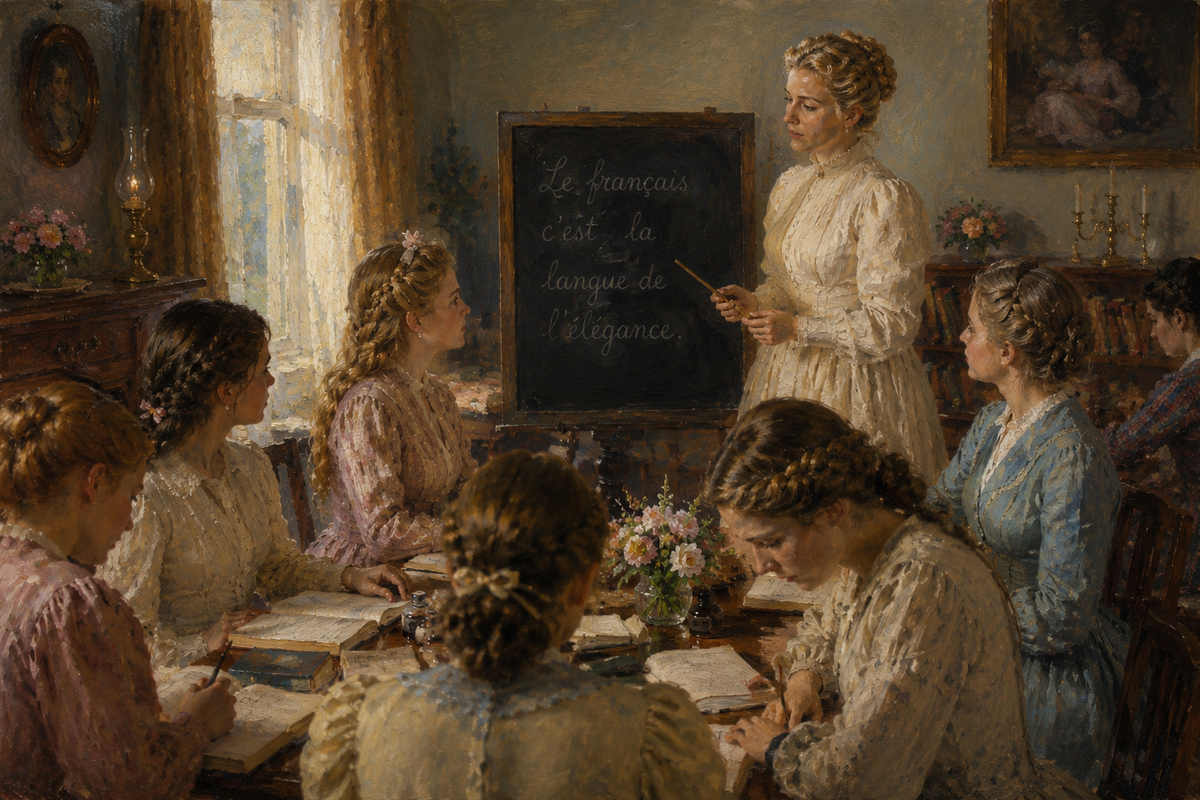
When I run things in the background like that, especially anything I know really well, it's anyone's guess what will actually jump out at me and legitimately grab my attention for a second. This time, it was a scene toward the beginning where Edwina, one of the teachers at the Civil War-era girls’ school where the film is set, was giving her students a French lesson.
The scene struck me as pleasant, as well as got my mind ruminating all over again about the sort of education young women from certain social classes once received. For example, they might learn French, literature, music, art, dancing, history, etiquette, and any number of other subjects, despite living in a society where relatively few women would ever pursue actual careers as we'd define them today.
So, why teach them all that?
When I was still basically a kid (and embarrassingly naive), I simply assumed people once valued education for its own sake in a way they just don't anymore. Obviously, I realized things are way more complicated than that once I got older. But the general idea of "learning for learning's sake" has stuck with me my entire life regardless and fueled a lot about how I've handled myself over the years.
I guess what I mean to say is that I've spent much of my life running what I now think of as Cat's Finishing School of Life.
I've quite literally always wanted to be well-read, artistically capable, knowledgeable about subjects that interest me, reasonably adept at languages, and able to appreciate things like music, film, art, and literature on more than a surface level.
Yes, the ultimate results of some of those efforts have helped my career over the years. Plenty haven't, but I still very much consider myself to be the better for having studied them.
Because most adults have this bizarre (to me) need to justify learning. Like, casually mention to a friend that you're studying Italian and they'll immediately ask if you're planning a trip to Italy or considering a career pivot for which that might be useful. Get serious about photography, and people immediately start asking you if you're going professional or where you plan to sell your work.
I'm sure other people's mileage varies wildly, but for me the answer is way simpler than that. Because shit, Susan, sometimes a person just wants to know how to make a croissant, OK?
What Were Real Finishing Schools Actually For?
Historical finishing schools weren't exactly the charming temples of learning I used to assume they were when I was a little girl. Their purposes varied quite a bit according to factors like period, place, and social class, but most were designed to prepare young women for the roles society expected them to one day occupy.
A typical curriculum might have included examples like:
- Modern languages, particularly French
- Music, singing, drawing, and painting
- Literature, history, and geography
- Dancing, etiquette, and conversation
- Needlework and household management
- Religious and moral instruction
Much of this education had practical social purposes.
For example, an “accomplished” young woman was significantly more valuable on the marriage market. A well-rounded education helped demonstrate her family's social standing, as well as assure a prospective husband that she would be able to entertain guests, correspond gracefully, manage a respectable household, and eventually supervise the education of her own children.
So much for my fantasy of enlightened Victorians passionately supporting women's intellectual development, right? Just one of many romantic childhood illusions shattered over the years.
But I do think there was something incredibly worthwhile tucked inside that deeply restrictive system – the idea that education could (and maybe even should) actually cultivate and refine human beings in meaningful ways.
I strongly dislike the notion that its only real purpose is to land you some job someday.
A cultivated person possesses knowledge, skills, aesthetic judgment, and enough familiarity with the wider world to participate intelligently within it. Education in turn shapes what you can one day understand, appreciate, discuss, and create.
I've actually built my entire life around this idea — learning things and sharpening skills for personal enrichment first and "everything else" second, if at all. And it's really added a lot to my existence over the years that I can't imagine being without.
It also occurs to me that others might potentially value this idea. You know – keep the cultivation, lose the patriarchy, and design the curriculum yourself.
Starting Your Own Finishing School
You're already more than familiar with all of modern society's suggestions as far as what to do once you become good at something, I'm sure:
- Learn photography? Time to think about shooting weddings for a living.
- Make beautiful things? Start selling those bad boys pronto.
- Develop expertise? Go into crushing debt pursuing a formal education on the topic so you can potentially turn it into a career someday.
- Bake magnificent bread? Congratulations on your exciting new small-business opportunity, apparently.
And I'm not knocking any of those paths, especially if those are options you genuinely want to explore. (I've even pursued a few myself.) Turning every developing skill and interest into a revenue stream, credential, or potential public identity just because your parents would probably be thrilled gets super exhausting, though.
Your personal finishing school is about something different. Its job is to help you become someone whose abilities, knowledge, and interests make their own life richer and more colorful.
Enrollment is easy, and tuition varies. And of course, the administration is extremely relaxed.
1. Decide who you want to become
So, picture a world where concepts like employment, credentials, money, and the importance of other people's opinions have up and disappeared. What would you still genuinely like to know or be able to do?
Which parts of the world (and life as an imperfect human) might seem more worthwhile if you understood them better?
Maybe you've always wanted to be able to recognize constellations on sight, speak conversational Japanese, or understand classical music. Some people have always known they wanted to cook beautifully, know how to identify local wildlife, read ancient mythology, or be able to repair things around the house themselves.
Forget about constructing an impressive person society approves of. Focus on creating a life you might genuinely enjoy living.
2. Build a curriculum around curiosity
Choosing your "classes" is the fun part, as your curriculum can be as structured or ridiculously eccentric as you like.
You might choose something to know (like astronomy or history), something to make (like pottery or poetry), or something you'd like to appreciate more deeply (maybe jazz, architecture, or cinema). Languages and cultural traditions can help you connect with a wider world, while practical skills give you a bunch of new hands-on things you can actually do.
Make sure you leave a little room for fun, delight, and possible whimsy, though. You know – heraldry, mushrooms, funeral customs, cloud identification... maybe the history of buttons.
The essentials.
Seriously, anything that makes your unique brain lean forward and go, "Wait, tell me more about that" is fair game. Just make sure you treat these as possibilities rather than hard and fast requirements. Because six exciting new interests can turn into six chores pretty damn fast.
Ask me how I know!
3. Give yourself permission to be a beginner
Being terrible at something might be acceptable (or even endearing) when you're 7. Adults, on the other hand, are expected to possess total competence at anything and everything – exactly what makes returning to absolute beginnerhood so uncomfortable for anyone looking to learn something new past age 20.
And yeah, it's not easy to find yourself speaking French at toddler level or making paintings that look like absolute shite as a grown-ass adult. Because you want to be Great™ at everything yesterday, and the struggle is real.
Carry on, though.
Use beginner books, watch introductory lectures, take community classes, and practice basics. Learn five useful phrases in French or German really well before you worry about being able to pass as a native speaker.
You don't even need to be particularly talented to get something out of this. There's nothing wrong with being a mediocre pianist who derives enormous pleasure from playing the piano. A recent sit-down at our recently tuned piano actually reminded me of this firsthand the other day.
I'm very mediocre at piano and always have been. And I've loved every minute of my one life that I've spent playing, so 10/10 would recommend!
4. Learn deeply enough to change what you notice
A personal finishing school can definitely include casual dabbling, but some subjects can really benefit from the occasional deeper dive:
- Learn botany or entomology, and watch how your morning walk through your neighborhood opens way up.
- Start studying film, and you can't help but start noticing editing, composition, set design, and cinematography choices that once went straight over your head.
- Understanding a little music theory makes you keen to structures you've probably heard hundreds of times without actually recognizing them.
Architecture turns buildings into artifacts, geology turns rocks into so much more, and history can transform even an ordinary street into a place that's truly saturated in invisible former lives.
Knowledge exponentially increases the resolution of ordinary life. I can't stress enough how much less drab life becomes as a result.
5. Let some accomplishments stay private
What would you still want to learn if nobody else would ever find out you knew it? Seriously, delete the hypothetical future social media posts, and forget the certificate. Imagine there's no Cheddar whatsoever involved and zero opportunity to impress anybody at dinner.
Take a long, hard look at what's left. Pay attention to that.
I'm not necessarily saying this approach to learning somehow isn't as genuine if you decide to share what you're learning with other people. I just really want you to understand that witnesses aren't required.
I know reading all of Shakespeare feels like something you should announce to the world at large, but you don't have to. And it's OK if you just want to keep the paintings to yourself if you pick up oils or watercolors.
A person can even become remarkably knowledgeable about ancient Egyptian funerary customs and afterlife beliefs while everyone around them remains blissfully unaware. (Might even be better that way, because you should see the looks I get when I bring up the Duat to anyone other than my husband.)
The knowledge, as well as the experience of acquiring it, has value either way.
6. Follow rabbit holes and adjust the curriculum
Traditional schools have course requirements, but you can set whatever rules you want for yours. In fact, I heartily recommend letting one thing lead to another whenever possible.
Like, maybe you start learning French, suddenly become interested in French cinema soon after, discover the Nouvelle Vague, start reading about general film criticism right after that, and eventually wind up studying cinematography somewhere down the line.
How boss would that be? I'm guessing very.
In my experience, one subject almost always opens doors into several others, and I wouldn't personally have it any other way. So let interests cross-pollinate. Add course electives because something fascinating wandered across your path on a Sunday afternoon accordingly.
You're also within your rights to abandon any subject if you're not really feeling it anymore. Maybe you'll return to it in a decade or so with entirely different eyes, and maybe you won't. Let your curiosity have the final call.
7. Never graduate
There's no final achievable state of Cultured Person™ we're pursuing here.
You're never going to reach a point where you know enough languages, read enough books, recognize enough paintings, or accumulate enough obscure facts for flashing lights to appear out of nowhere, right before somebody hands you a certificate you can show your parents in exchange for that "I'm finally proud of you" cred you've been chasing your whole life.
And thank God for that.
A finishing school for life – one you personally founded and are attending just for fun – ought to evolve because you do. What fascinated you at 25 probably will look very different at 50, while something you barely noticed at 40 might consume your every thought by 70, and that's all part of the experience.
Really, Cat's Finishing School of Life has an absolutely appalling graduation rate. The headmistress considers this a sign of success.