I Haven't Done It Yet, but I'm Already Having a Wonderful Time
The psychology of anticipation and the strange pleasure of enjoying things in advance

Lately, I've been going through a bit of ennui, as I sometimes do. As a result, I've been finding it harder than usual to feel much enthusiasm for life. I know it will pass as it always does, but I can't help but turn certain ideas over in my head in the meantime.
Among other things, I've been thinking about how there are few things quite as satisfying as having something wonderful coming up on my calendar. (I kind of need to add a couple more somethings, as there's not much on there at the moment, but more about that in a second.)
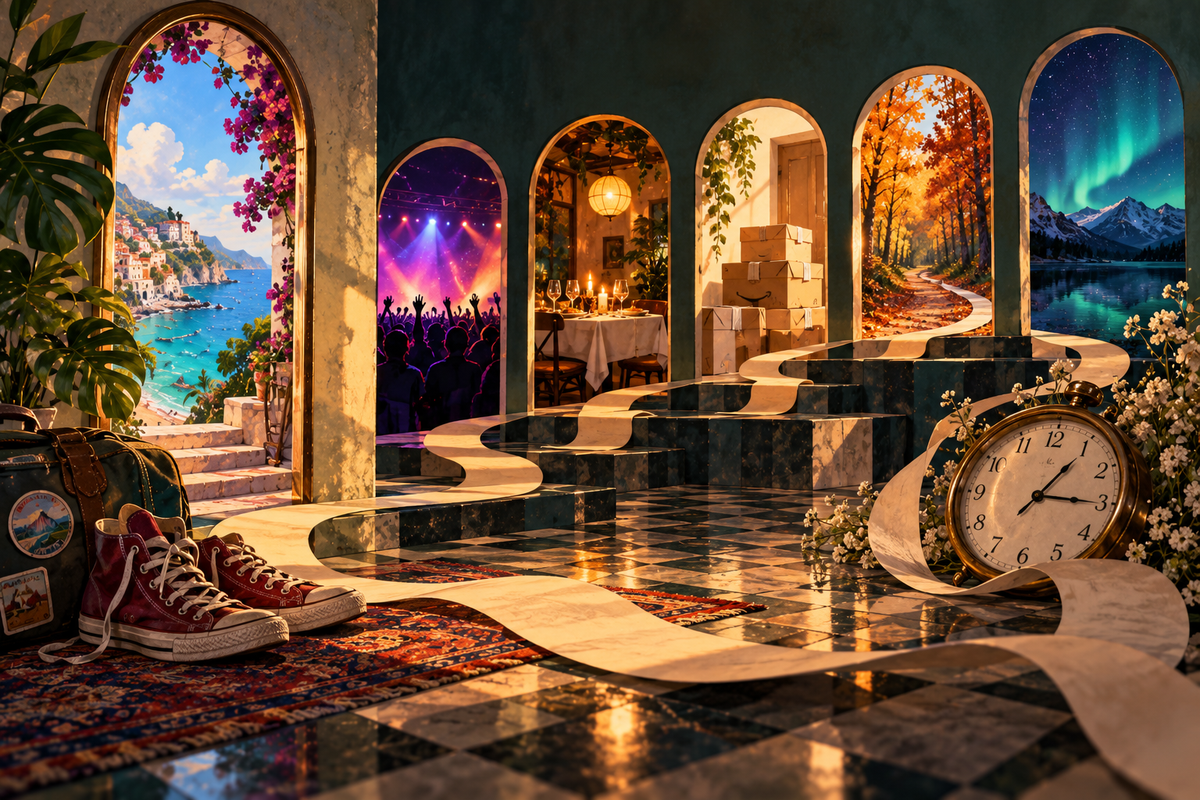
The thing you're currently looking forward to could be nearly anything – a vacation, a concert, dinner at a favorite restaurant, or even just a package containing something you've been wanting for ages. Whatever it might be, the mere idea of enjoying that thing in the future often has the power to make an otherwise unremarkable Thursday a lot easier to slog through.
I've also realized over the years that I actually enjoy the anticipation of something to a much greater degree than I enjoy the "something" itself. So, why does waiting for something good sometimes feel even better than getting it?
Let's discuss.
The Science of Looking Forward to Things
Psychologists actually have a term for the unique pleasure we experience when imagining something enjoyable in our future – anticipatory pleasure. It's also a massive part of our ability to experience positive emotions before a rewarding event actually happens.
However, our brains distinguish between abstractly wanting something and actively enjoying it once we have it.
Dopamine plays an important role in motivation and reward-seeking, as it helps to make anticipated experiences feel as compelling as they often do. (Its job is considerably more complicated than simply dispensing happiness whenever we encounter something we think is nice.)
Researchers have also extensively studied the mechanics of savoring, the process of appreciating enjoyable experiences before, during, and after they happen. Through savoring, just thinking about an upcoming pleasure can genuinely become part of the pleasure itself.
An interesting example to consider – in 2010, researchers conducted a study involving 1,530 Dutch adults and the concept of upcoming vacation time. The results demonstrated that the participants who were preparing for vacations reported greater happiness than those who weren't planning trips at all, sometimes significantly so. But afterward, most of the vacationers weren't actually much happier than the non-vacationers were.
This suggests the pre-vacation boost likely had a lot to do with the magic of anticipation. In other words, the week you spend daydreaming about your vacation before you've even packed your bags might be doing more for your mood than seems logical at first.
7 Reasons Having Something to Look Forward to Feels So Good
By now, I've looked forward to enough things that eventually happened to agree that anticipation can have a lot of influence over our experience of everyday life. Let's chew on how that works for a second or two.
1. We get to enjoy something before it happens
So picture what happens right after you finally get around to making a dinner reservation at a restaurant you've been dying to try. I don't know about you, but I'd probably spend days looking at the menu and thinking about what to order. I'd certainly imagine in vivid detail just how wonderful everything will taste.
Psychologists call this anticipatory savoring. By deliberately imagining an enjoyable future experience, we can generate very real positive feelings in the present.
Naturally, the dinner itself will still be really nice to experience, especially if you're sharing the experience with someone who wants to be there as much as you do. But I personally love that it's possible to get at least some enjoyment out of it before you even start racking up a bill.
2. Our imaginations conveniently leave out the annoying parts
When most of us think about something we're looking forward to, we also tend to concentrate on the best stuff about it. (God knows I do.)
A vacation you might be planning always seems pristine in your imagination. The weather is perfect, the scenery is breathtaking, and everyone you've brought along for the ride actually behaves themselves and gets along. Nobody loses their luggage or has to be disappointed by shitty hotel pillows that smell like sadness and feel like regret.
If only reality cooperated like this. That's the magic of affective forecasting in action – how people predict their future emotional experiences. Sadly, we are often quite inept at estimating just how intensely (or how long) future events will actually affect us.
Mental previews are conveniently selective, so they drastically emphasize what we're excited about while also overlooking all of the ordinary little conveniences that will also probably be part of the picture.
3. It makes ordinary days a lot more interesting
Today is really pretty good as far as Wednesdays go, but a typical one in Shannon Land consists mostly of mundane tasks like work, deciding what to make for dinner, and possibly laundry.
But if I've got something more enjoyable than average planned for Saturday, Wednesday suddenly feels a little more magical, even if I'm literally spending it up to my elbows in dirty bedding and musty bath towels. I can enjoy that positive thought whenever I like – or whenever all the dryer lint gets to be too much, whichever comes first.
As someone who's very prone to depression, anxiety, and all sorts of similar things, it really helps me to remember the ordinary, occasionally depressing routines of my life aren't necessarily the entire story. Something different (and possibly better) is always coming, even if that something is simply a cool new movie I've been meaning to watch.
4. It reminds you that the future still leaves room for possibility
Anticipation gives us access to something reality will eventually take away from us – uncertainty about how a particular experience will play out.
Like, let's say I've got tickets to see... oh... a Taylor Swift concert. (I love me some Taylor, so bear with me.) I can think about how cool it would be if she played "Maroon," "The Last Great American Dynasty," and all my other favorites. I get to picture all sorts of unexpected moments and imagine the excitement of being there playing out any way I want.
But once it's over, those possibilities have to give up their seats to make room for memories of what actually happened. Sure, maybe she played "Maroon," and I got to commemorate with some cool photos for my Insta-feed. But I possibly also spilled my drink all over myself and had to listen to it while damp and reeking of stale beer.
All that to say future experiences leave room for surprise, discovery, and the possibility that something might turn out even better than expected.
But it's worth remembering that optimism works best when we leave room at the table for reality. Because expecting a lovely evening is one thing. Expecting that one evening to become the single greatest evening in recorded human history is really just setting yourself up for disappointment, whether the bathroom situation at your destination is up to snuff or not.
5. Planning becomes part of it all
I don't know about you, but I can for sure get a surprising amount of enjoyment out of preparing for an experience, especially when it involves exploring something new and unfamiliar.
Like recently, I started reading Marcel Proust for the first time and promptly decided that trying madeleines with linden tea was an absolutely necessary part of that adventure. So I ordered some. And I proceeded to devour everything I could about Proust and his philosophy of life while I waited for them to arrive, too.
And it was awesome.
All of it, including returning to Swann's Way after experiencing madeleines and linden tea for the first time. Planning gives us valuable opportunities to make choices and exercise more control over our future experiences in a similar way.
6. Anticipation is a way to extend the experience
Have you ever really thought about the way some of life's most enjoyable experiences are also disappointingly brief?
A wonderful meal you've spent weeks planning and many hours preparing might only last an hour. (Thanksgiving, I'm looking at you!) That imaginary Taylor Swift concert I was picturing before would only last an evening. Even an extended vacation eventually ends, usually with a fuck ton of laundry and an inbox full of people wondering where the hell you've been for the last two weeks.
But anticipation can easily stretch that enjoyment across days, weeks, or even months. Especially if you're good at it.
There's also hedonic adaptation to consider – the human tendency to eventually become accustomed to even the most positive changes and experiences. The excitement of something new inevitably fades as it slowly becomes familiar, regardless of how grateful you are, until you eventually return to your baseline.
Anticipation maximizes the enjoyment we get out of an expected pleasure before we've had the chance to get used to it and watch all its magic slowly fade away. I can enjoy thinking about Taylor potentially playing "Maroon" for me repeatedly, but once that concert's over, it's over.
7. It makes it easier to feel interested in tomorrow
Sometimes I really struggle to feel a sense of connection with the future that's actually tangible enough to get me out of bed in the morning. Having things to look forward to, even if they're small, can really help with that.
When I have something I'm genuinely interested in doing, tomorrow feels like more than just another collection of obligations and responsibilities I could do without. It's also bringing me something I've actively chosen and am at least theoretically excited to experience.
That distinction gets extra critical when life starts feeling repetitive, needlessly difficult, or possibly even pointless.
How to Make Anticipation Part of Everyday Life
At this point, I've simply accepted the fact that even the most profound pleasures eventually fade as far as the emotional boosts they might bring to the table. So what I've done is try to bake ample numbers of anticipatory events into my everyday life.
Seriously, you don't always need elaborate vacations or expensive purchases to manifest the psychological benefits of looking forward to something. And thank God for that, because I'd be so fucking broke.
- Add small pleasures to your calendar. Choose something small you genuinely enjoy and assign it a spot in your week. It could be anything from a special breakfast to an afternoon at the beach to an evening devoted to a favorite film.
- Give yourself some lead time. When you can actually swing it, plan enjoyable activities far enough in advance that you also have plenty of time to anticipate them. Yes, spontaneity can be wonderful, but there's also something to be said for spending a few days looking forward to Friday.
- Make the prep work enjoyable. Go ahead and research the restaurant, choose the music, gather your supplies, and mentally explore every pleasant possibility. Let the planning process fully become part of the experience.
- Keep your expectations in check. Go hog wild imagining what you're excited about, but don't forget to also accept that reality will probably contribute a few unscripted details. Thankfully, those can sometimes be the best parts.
- Have more than one thing to look forward to. One single huge event can really make everything afterward feel disappointingly empty if you let it. (Christmas was kind of like this for me as a kid.) Smaller pleasures scattered throughout the month give you more chances to enjoy the future before it arrives.
Happiness Does Have a Future Tense
I'm no different from anyone else in that my default is to think of happiness as something that happens whenever I finally get what I want (if I get what I want). But I've also trained myself over the years to remember enjoyment can begin long before the experience itself.
The ability to create things worth looking forward to, especially when life isn't doing a very good job of delivering by itself, has literally saved my life more than once now. And I'm sure it will continue to do so for however many years I have left.
Because the future is going to arrive whether I've made plans for it or not. I'll take all the reasons to feel good about that as I can get.