9 Lessons and Observations from House of Leaves (So Far)
A few things I've picked up along the way, both literary and otherwise

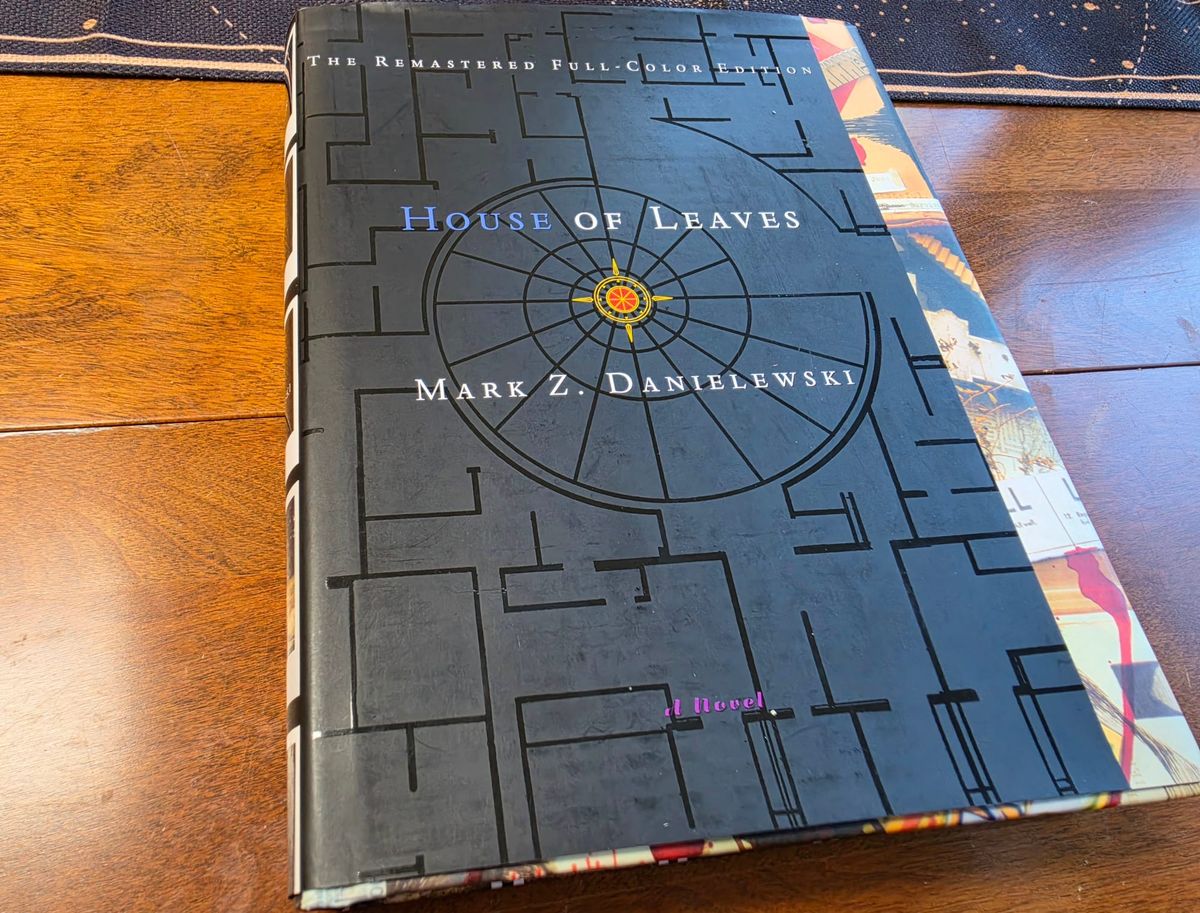
So, I finally got around to checking another small task off my ongoing Death Tour list – tackling Mark Z. Danielewski's very ambitious House of Leaves (or starting to, rather).
To really oversimplify things, it's about an extremely screwed-up house that's bigger on the inside than it is on the outside, plus the depths of personal trauma for a little extra razzle-dazzle. It's also told in layers via multiple narrators:
- At the center of things is The Navidson Record, a documentary that may or may not actually exist.
- It's being tracked, researched, and analyzed by the deceased Zampanò.
- Zampanò's analysis is, in turn, being analyzed, annotated, and obsessed over by tattoo apprentice Johnny Truant.
At various points along the way, you also get input from an anonymous editing team, allegedly processing all of the above in preparation for publication. Plus, there are tons of extras to unpack and consider, like letters from Johnny's institutionalized schizophrenic mother, Pelafina, among other things.
I'm mostly aware of this book in the first place because of my one-time love for the author's sister's music. Poe's Haunted is a masterpiece and was very much part of the soundtrack of my life in the early 2000s. Haunted also serves as a companion work to House of Leaves, so naturally I was curious.
I just somehow also made it 25 additional years without actually making it a point to sit down and tackle it. I knew that if I "accidentally" waited another 25, I could be dead, so here we are.
I've been taking my time with this, so I still have plenty of book ahead of me. But I've already learned a few things I feel like sharing, some of which might even be useful outside the context of a novel about a house with some serious architectural weirdness going on.
1. Reading can apparently be pretty physical
Someone on Threads was posting the other day about getting ready to read this and wanted tips on what to expect. I told her that you don't actually read House of Leaves so much as you work on House of Leaves.
That said, I've always been aware of this particular book's reputation for being strange, complicated, and occasionally very difficult to navigate (all pluses, in my world), but actually experiencing it in person is the only way to understand why.
I've been spending a lot of time lately doing things like decoding messages, translating obscure languages, investigating suspicious punctuation, and wondering whether some of the characters involved are just straight-up lying to me.
I've even had to rotate the book at times.
I've read text forwards, backwards, and every which way. Sometimes the book gives me choices as to where to go next. There are crowded pages that underscore the house's dimensions when they're super cramped, as well as text that sprawls across multiple pages when the house's inner spacing spreads way, way out.
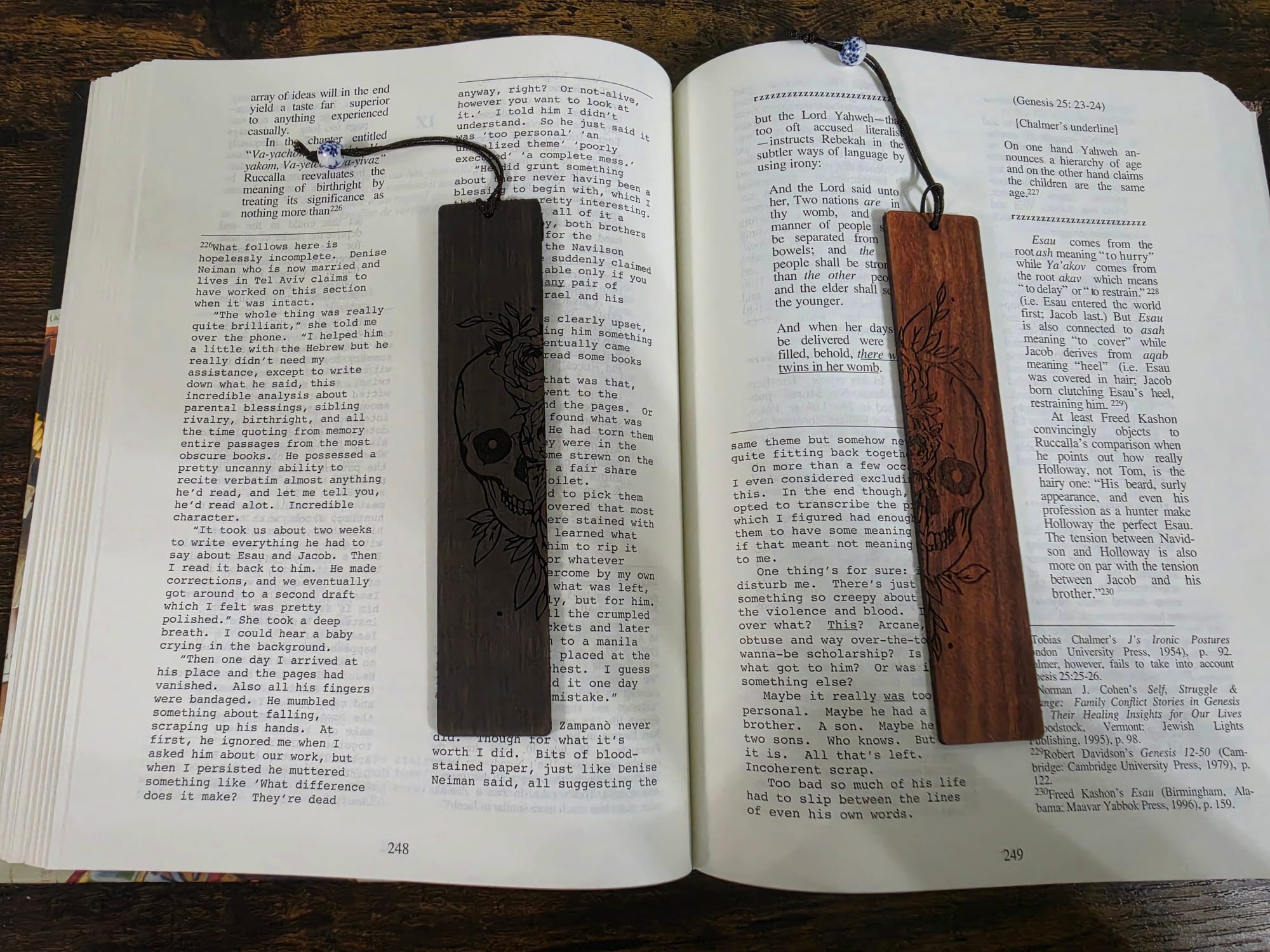
The formatting of the book mirrors what's going on in the story you're reading. Seriously ingenious and A+ storytelling, but this isn't an experience for everyone. Best make sure you have at least two bookmarks handy before you try to dive into this yourself.
2. You can't always trust the footnotes
Footnotes are most books' way of showing you someone has done their research. But in House of Leaves, they're... not necessarily that at all (or at least not always).
Zampanò's analysis of The Navidson Record comes with an impressive assortment of citations, academic commentary, and references of questionable authenticity. Johnny Truant, of course, contributes his own footnotes, occasionally contradicting himself outright or wandering off into some fairly disturbing personal territory.
The scholarly presentation this book has going on encourages trust, even while the content itself blatantly undermines it – a solid reminder of how easily people mistake the appearance of authority for actual credibility. I don't think I'll ever look at a bibliography the same way.
3. All the hidden messages make everything even more suspicious
So far, I've decoded Morse code, unraveled multi-layer acrostics, translated unfamiliar languages, and obsessed over tiny marks on pages that I know mean something.
But the problem with finding hidden messages is that you eventually start looking for them everywhere. Every weird, random capital letter looks sus at this point, and every apparent typo obviously warrants a second look. I'm even side-eyeing standard punctuation at this point.
4. Houses don't always follow the laws of geometry
I've spent decades dreaming about houses with impossible interiors, just like the Navidson house in House of Leaves. Rooms materialize out of nowhere, hallways lead into apparent abysses, and all sorts of other weird things.
In dreams, all of this feels normal in that special way dreams have. But navigating my way through a weird novel while perfectly conscious has me thinking a lot about how houses function in memory and imagination. Then there's the way so many other people dream about exactly these things, as well, but that may be a topic for another day (and possibly one of my other publications).
5. Memory is an unreliable witness
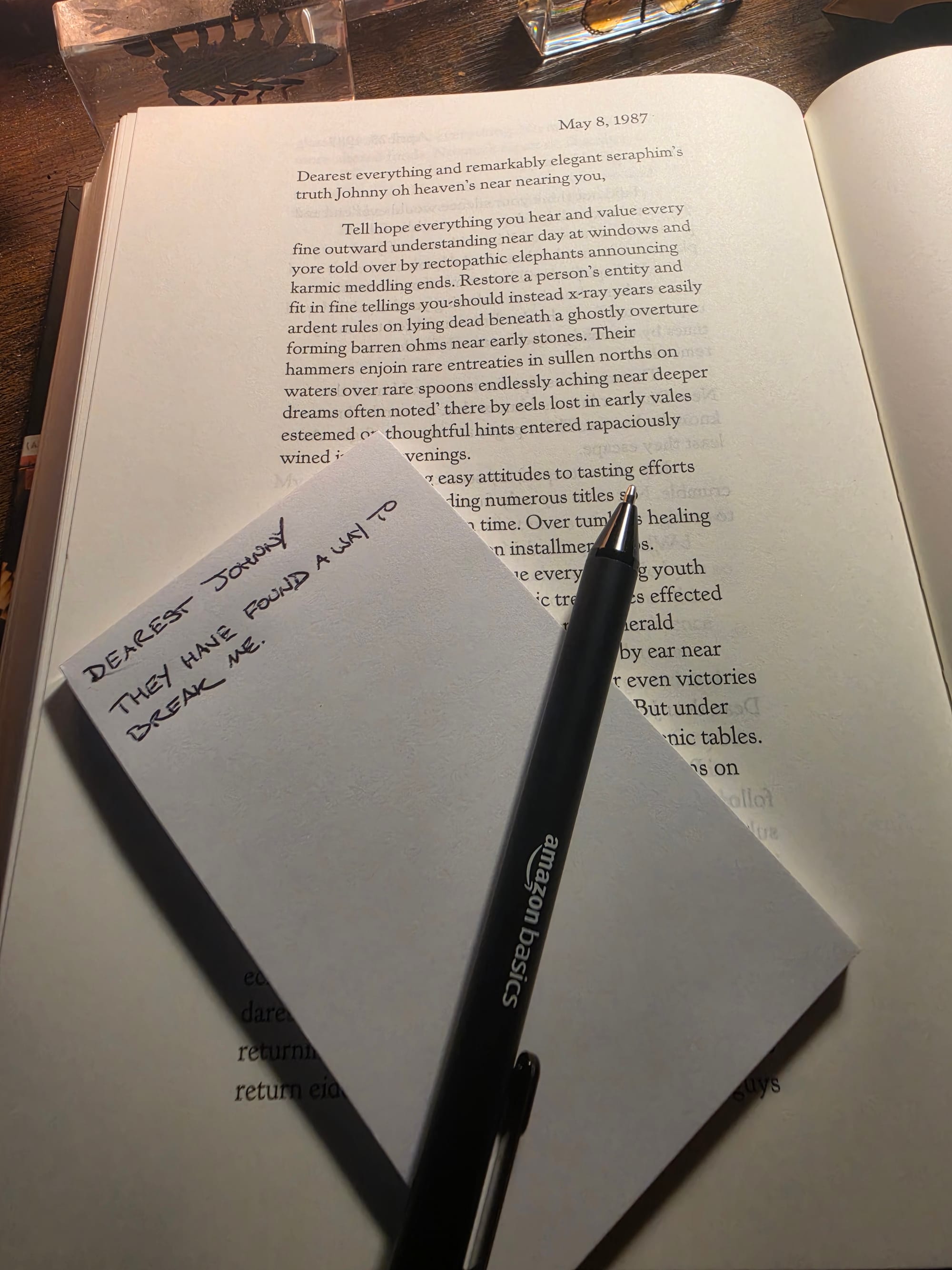
Johnny's recollections are filled with contradictions, particularly where his childhood is concerned, and his mother's letters from inside the institution complicate matters further. She's brilliant, jaw-droppingly multilingual, seemingly affectionate, and profoundly unreliable.
However, her writing abruptly shifts from remarkable clarity to disturbing confusion within a few sentences.
The novel itself also makes it difficult to separate deliberate deception on the part of whoever's speaking from imperfect memories. Johnny may be lying, misremembering, strategically protecting himself, or all three. After all, even the most intentionally truthful among us occasionally revise their personal histories, sometimes so thoroughly that we eventually believe the revised versions ourselves.
6. Sometimes the real monsters are the people who decide you are one
A lot of readers either strongly dislike Johnny or at the very least find his sections less interesting than the Navidson narrative. I'm actually having almost the opposite reaction, partly because I recognize something of myself in his history. (No, I'm not a drug addict or a sexual maverick. Sorry.)
As an autistic child, people I knew often described me as unnatural because of various ways I behaved and experienced the world. In a couple of very painful cases, I can actually recall having been called a monster or similar, and there were many instances where some room fell into silent horror after things I said that felt totally normal to me.
I've even been told I didn't deserve a relationship because of the ways I love and express myself differently from other people.
So I can't help but relate to Johnny's experiences of being treated as dangerous, defective, or somehow less than human. I don't necessarily trust him, and I certainly don't excuse everything he does, but I wonder how much of the person he becomes has been shaped by the way others have treated him.
7. Obsession is contagious
Navidson becomes obsessed with investigating the house, Zampanò becomes obsessed with documenting Navidson's experiences, and eventually Johnny becomes obsessed with Zampanò's manuscript. Now here I sit, completely obsessed with researching obscure references, examining page layouts, and spending an unreasonable amount of time discussing people who may not even exist within the novel's fictional universe.
This book feels like an infection that spreads from character to character and then to you. And you will eventually spread it to other potential readers, I promise you.
I see what you did there, Danielewski.
In other words, the book encourages precisely the behavior it discusses, as every new discovery raises yet another question and every unanswered question becomes another excuse to keep digging. If you're prone to falling down research rabbit holes while enjoying every feverish second of it, you'll love this.
Further Observations Pending
I've still got a substantial portion of House of Leaves ahead of me, and I'm sure some of my current theories will turn out to be spectacularly wrong. But that suits me fine, as half the enjoyment of tackling a book like this comes from figuring things out along the way.
So far, this has easily been one of the strangest and most engaging reading experiences I've ever had. I'm actually seriously digging all the homework, puzzles, suspicious punctuation, and occasional need to hold a very large book at an unreasonable angle.
I will miss this experience terribly once I'm done. And I don't think I'll ever see my house quite the same way again, but this is hardly a bad thing.