Recognizing the Patterns in Your Own Creative Work
What creative patterns and nudges can reveal about the body of work you're cultivating
So, apparently my mind switched gears at some point this week and is currently in the mood to write poetry all day. (I am not, in fact, supposed to be spending all day writing poetry.)
Welcome to life with a brain like mine, I suppose.
This wasn't the result of some grand artistic reinvention where I dramatically stared out a rain-covered window and declared, "From this day forth, I shall speak only in verse" or anything. (Don't I wish.) My creative process just isn't that glamorous, and at times, it's even less predictable.
The first poem actually happened because I wanted to post some renders I had languishing on my phone that were originally inspired by a specific song. I just didn't feel like posting it with the actual lyrics.
Apparently, busting out a creepy little nursery rhyme on the spot felt like a better solution, so that's how "The Leech Song" was born.
Then a little later on, I found myself reflecting on the past, people I once knew who are gone now, and roads gratefully not taken. Experimenting with a different style for "Leech Song" was so much fun, I decided to channel some of what I was feeling into "Little Red Bird," also allowing it to double as an entry for a Vocal contest I wanted to enter.
Of course, I was technically supposed to be writing about swimming pools for a client at that exact second, so I'm sure a little productive procrastination was also at play here. But I digress.
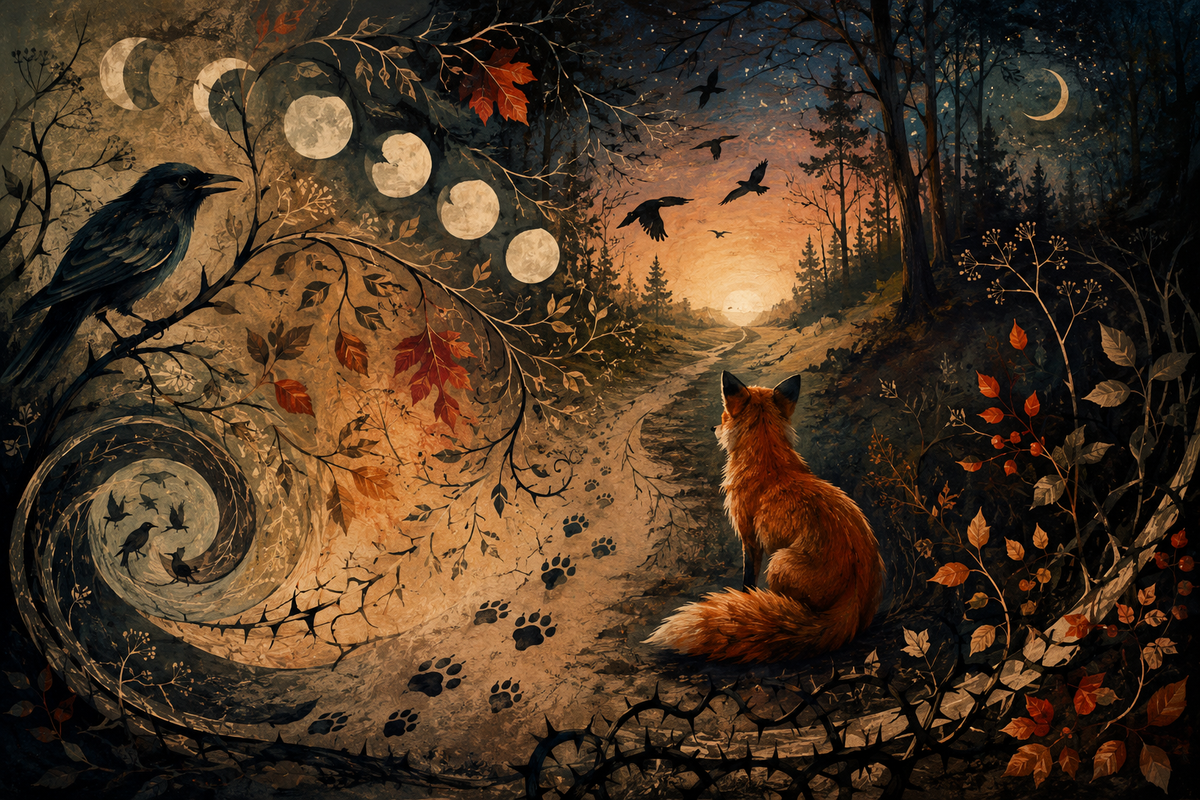
Poetry just seemed like it was a better way to say some things I wasn't sure how to put into normal words (or maybe just didn't feel like processing that way) despite really wanting to talk about them. So, foxes, birds, thorns, and little warnings translated into verse it was.
I've also spent a substantial enough portion of my one life making things (and relating to other people who make things) to know that when a person's imagination insists on something in particular, there's usually a good reason for it.
Imaginations Leave Breadcrumbs
People love talking about "finding your voice" as though they might stumble across it hiding behind the sofa cushions one day, dust it off, and promptly start using it. But I've learned over the years that this isn't really how it works.
Creative voices drift and molt, especially over the years. And if they're anything like mine, they might even wander into neighborhoods said person didn't even realize existed. I can look back on my life and chart almost the whole journey through the things I became mega-obsessed with for a while. Books, films, certain ideas. Philosophy. Different takes on God.
So if one year finds you wanting to write about travel or spirituality, while another year is all practical stuff about freelancing, there's probably a reason.
Most people's imaginations have a habit of working ahead of them, especially if they've dedicated their lives to writing, art, or anything similarly creative. Long before your conscious mind decides, "I'd really like to explore this approach further," your creative instincts have already started laying a trail of breadcrumbs through your larger body of work.
When Prose Gets Up and Excuses Itself
I don't think I logged on to be creative yesterday, secretly meaning to write poetry or anything. I do think I did it to try to understand some of the very large, abstract things that have been going on in my head lately.
For me — creatively — that almost always means writing prose, in my personal journal if nowhere else. But every so often, poetry decides it will simply die if it doesn't come to my party right that second.
Because poetry doesn't overexplain anything. It just points whoever's engaging with it in the right direction and lets them fill in the rest of the blanks for themselves. A poem hands you an image and wanders all the way off into the woods before you have a chance to ask any follow-up questions.
That said, it's easy for creative people to try to force an idea into the wrong shape simply because that's the shape they're used to, especially after a while. But maybe not every experience needs to become an essay (or whatever medium you usually default to) just because that's how you usually do things.
Sometimes trying a new style, approach, or medium on for size is totally the right approach to an idea you otherwise don't quite know what to do with. Some of the work I'm proudest of actually came to be in exactly that way.
I should probably try to remember that on my own more often.
Symbols Make Surprisingly Generous Companions
One thing I realized while writing yesterday's poems is that past a certain point, I wasn't actually writing about the people who inspired them anymore.
I was writing about lessons I'd learned over the years and about me. I was just doing it from outside of myself while looking in through the windows, because it was easier to process some of this stuff that way, especially if I wanted the results to be anything I'd feel comfortable sharing with others.
Symbols are really democratic that way, as they don't insist on a single interpretation. They hand you a lantern and invite you to walk for a while, preferably without the need to know exactly where you're going. And they often manage to make the process fun and even cathartic.
Those Really Persistent Nudges Are Worth Paying Attention To
And I think that applies whether you write poems, paint landscapes, compose music, or build tiny ships inside bottles. (Although if you do build tiny ships inside bottles, I have questions. Mostly about patience, because I don't know her.)
Pay attention to things like repeating themes in your work or nudges to do something differently that feel unusually strong. Your subconscious is probably pushing you in that direction for a reason.
Plus, deliberately branching out and doing things differently after doing them just one way for a long time is a great way to break out of a rut or otherwise feel on fire about creating again.
Makes me realize I should probably write poetry a lot more often. It has a way of getting a point across that prose just doesn't handle quite the same way.