
By 50, You’re Done With More Than You Think
What changes for women in midlife and why you stop tolerating things that used to feel normal


Earlier, a quick reel passed through my Instagram feed while I was scrolling. It was a clip of Tori Amos chatting to the audience in between songs at one of her concerts, and she was talking about what turning 50 was like for her.
In particular, she mentioned the complete lack of fucks she had left to give about pleasing anyone else once she passed that age, as well as that she actually doesn't want to be 25 again. She said she's enjoyed aging for the most part, and that one day, the rest of us would understand where she was coming from.
It was the kind of thing the young version of me never really believed when I heard it come out of an older woman's mouth. In other words, I had a lot to learn back then, and learn I would.
You will, too, if you haven't already.
What's Actually Happening (Without Turning This into a Medical Lecture)
Around their mid-40s to mid-50s, most women move through perimenopause and then into menopause, or at least that’s the official version. The more interesting version is that your body starts renegotiating just how much influence certain hormones will continue to have over your day-to-day lived experience.
Because as it turns out, estrogen and progesterone don’t just handle our reproductive business. They also have roles to play in:
- Mood regulation
- Anxiety levels
- How strongly we respond to social cues
- How much importance we place on other people’s opinions
So once your baseline levels of those hormones (and others) start changing, a lot of what you thought was “just how you are” starts to change, too.
That surprised the shit out of me, because I quite literally couldn't imagine myself as someone less restless, less sexual, or significantly less invested in whether other people thought I was sexy. I saw those traits as core parts of my personality when I was younger, so I assumed they'd never change, even if maybe I low-key wanted them to.
Like I said, though. I had a lot to learn, and I absolutely found out that a person's hormones control so much more of their decision-making process and so-called base identity than I ever imagined. But like Tori, I actually see this as a good thing.
Without that thick, hormonal haze clouding my vision, I feel like I'm seeing a lot of things for the first time, and it's really pretty cool.
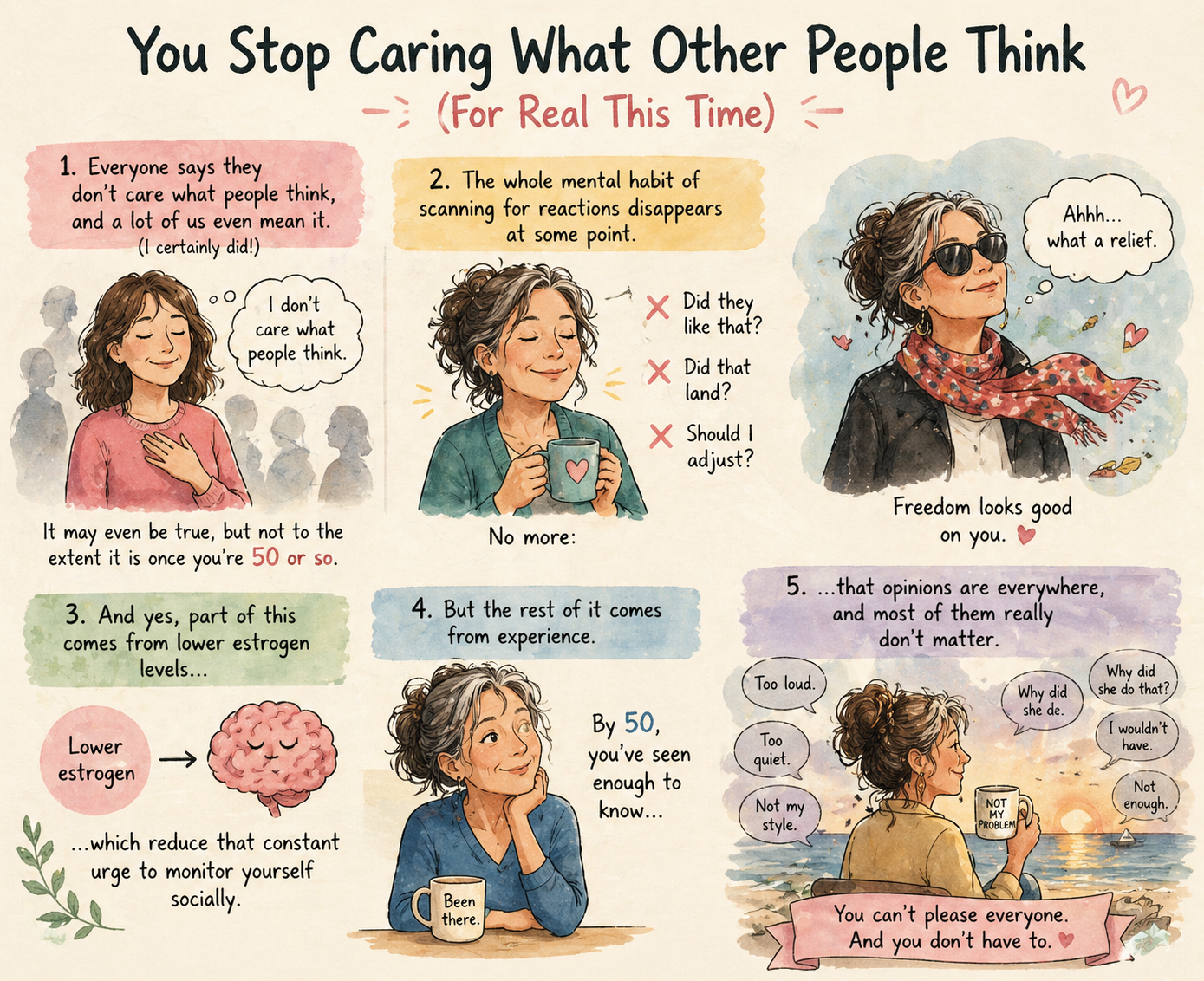
1. You Stop Caring What Other People Think (For Real This Time)
Everyone says they don’t care what people think, and a lot of us think we mean it. (I certainly did!) It may even be true, but not to the extent it is once you're 50 or so. That whole mental habit of scanning for reactions disappears entirely at some point. No more:
- Did they like that?
- Did that land?
- Should I adjust?
And yes, part of this comes from lower estrogen levels, which reduce that constant urge to monitor yourself socially. But the rest of it comes from experience. By 50, you’ve seen enough to know that opinions are everywhere, and most of them really don't matter.
As a result, you start making decisions without running them through an imaginary focus group first, and you say what you mean without adding a cushioning layer “just in case.” You also start to realize that sometimes that imagined audience doesn't even exist.
2. Your Bullshit Tolerance Drops Like a Lead Balloon
I used to be at least somewhat patient with most people. I could listen, empathize, and occasionally attempt to translate another person's confusing behavior into something that actually made sense to me. Even if I didn't give a single shit about the person or whatever it was they were going on about.
Now? Someone says something dumb or voices some opinion that doesn’t make sense, and my brain just goes, "No.'
Again, hormonal shifts play a role here. Estrogen has a way of smoothing over irritation, which gives the dumb shit people say an extra layer of emotional buffer on your end. But once that buffer's gone, it's all over. You notice circular conversations sooner and recognize irritating patterns faster. You'll also lose your tolerance for that noise.
And when you don't care at all? It's no longer a secret to anyone, including the person you're talking to.
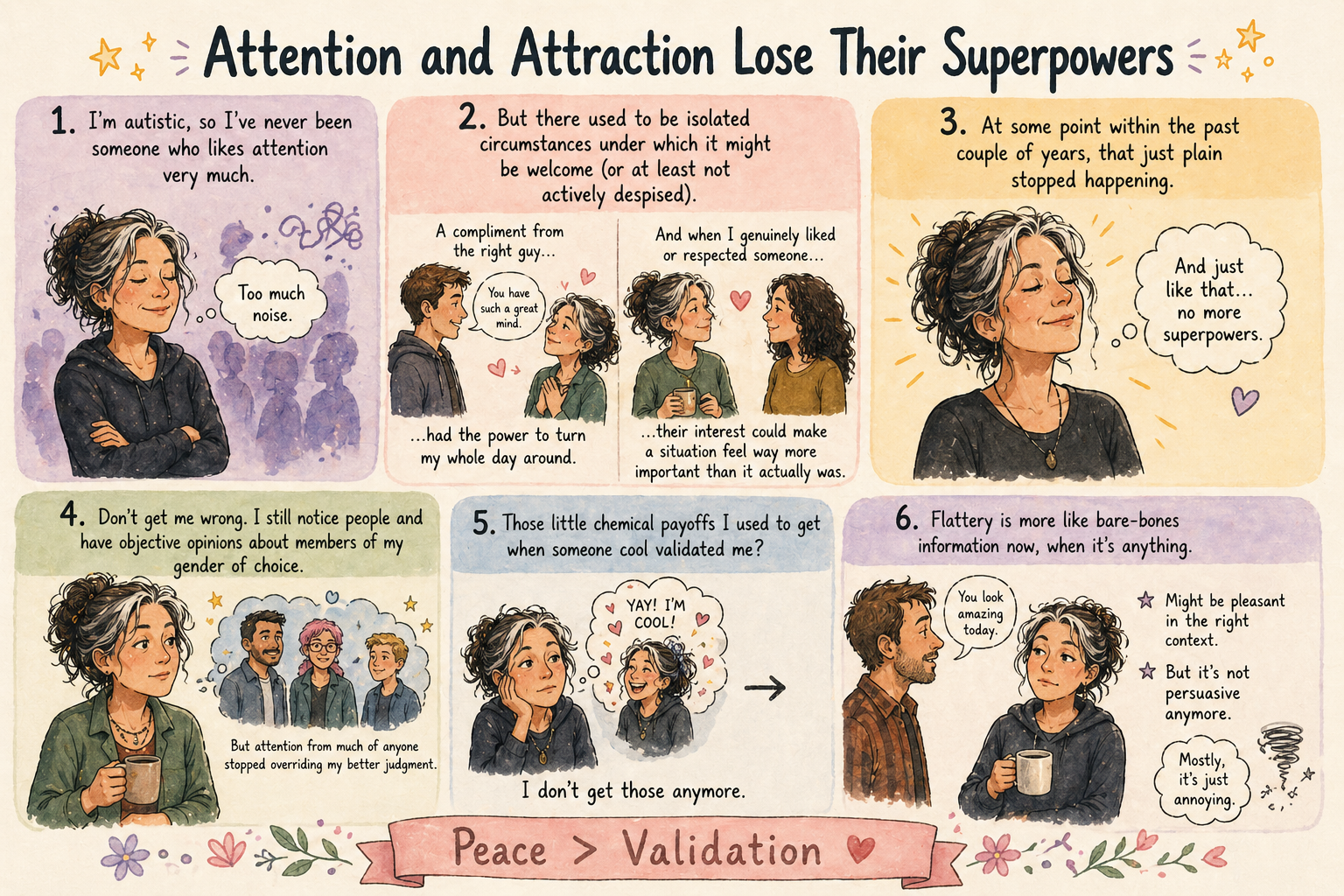
3. Attention and Attraction Lose Their Superpowers
I'm autistic, so I've never been someone who likes attention very much. But there used to be isolated circumstances under which it might be welcome (or at least not actively despised). A compliment from the right guy had the power to turn my whole day around. And when I genuinely liked or respected someone, their interest could make a situation feel way more important than it actually was.
At some point within the past couple of years, that just plain stopped happening.
Don't get me wrong. I still notice people and have objective opinions about members of my gender of choice. But attention from much of anyone stopped overriding my better judgment. Those little chemical payoffs I used to get when someone cool validated me? I don't get those anymore.
Flattery is more like bare-bones information now, when it's anything. It might be pleasant in the right context, but it's not persuasive anymore. Mostly, it's just annoying.
4. Your Emotional Reactions Become More Accurate
A lot of people assume aging dulls your emotional life, but that’s really not what happens here. I still feel things, sometimes deeply. I just feel the right things at the right volume now. (Finally.)
Without hormonal amplification pushing everything into high gear, my reactions match the situation more closely, and yours will, too. Minor inconveniences stay minor, and a real problem still gets your full attention, but the grey area in between stops feeling like a constant emergency.
As a result, you waste less of your precious time trying to figure out why something feels overwhelming, because fewer things actually do in the first place.
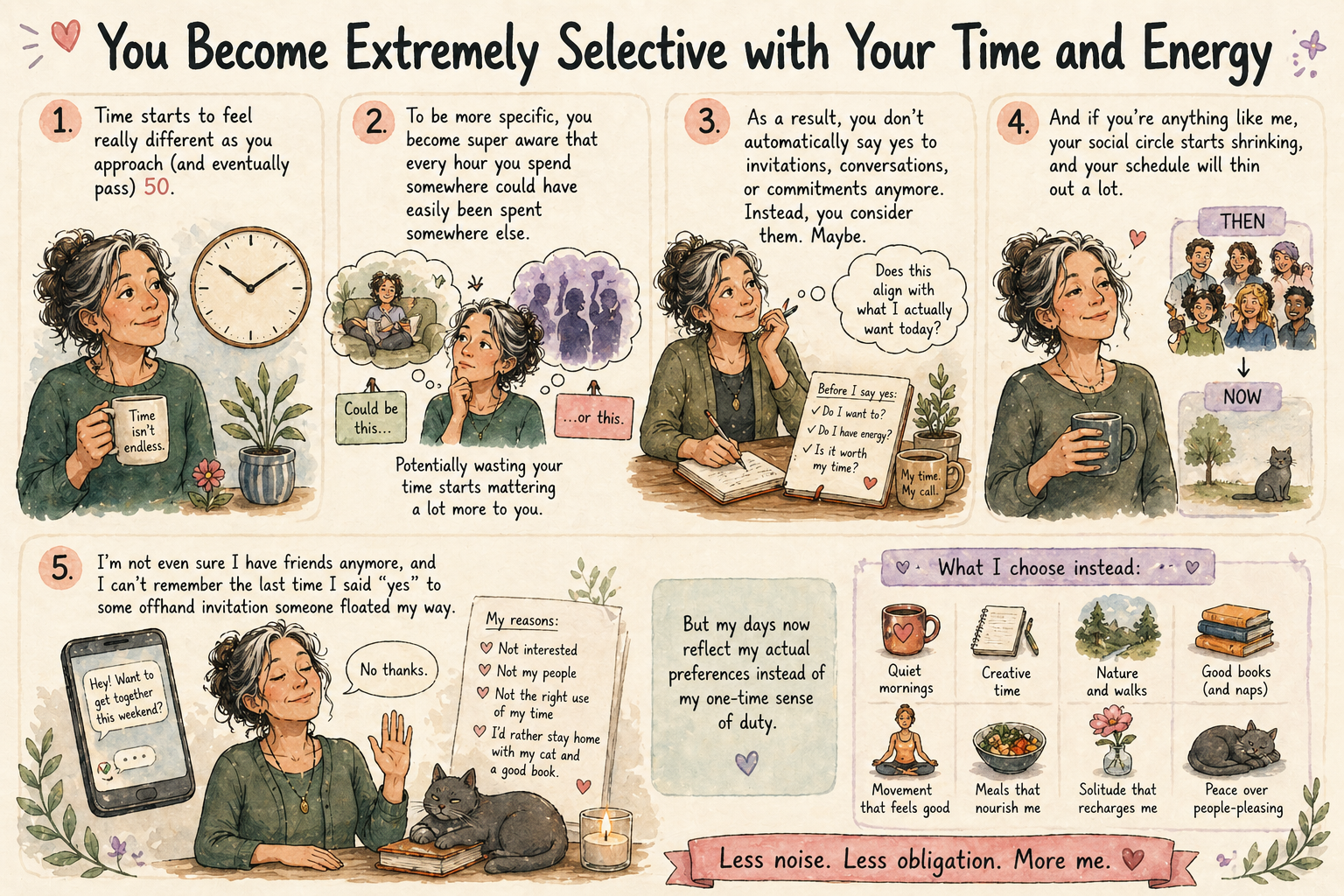
5. You Become Extremely Selective with Your Time and Energy
Time starts to feel really different as you approach (and eventually pass) 50.
To be more specific, you become super aware that every hour you spend somewhere could have easily been spent somewhere else. Potentially wasting your time starts mattering a lot more to you.
As a result, you don’t automatically say yes to invitations, conversations, or commitments anymore. Instead, you consider them. Maybe.
And if you're anything like me, your social circle starts shrinking, and your schedule will thin out a lot. I'm not even sure I have friends anymore, and I can't remember the last time I said "yes" to some offhand invitation someone floated my way. But my days now reflect my actual preferences instead of my one-time sense of duty.
6. You Stop Second-Guessing Your Instincts
At this point, I've seen enough patterns repeat themselves to recognize the signs early. So when something feels off, I no longer argue with myself for three hours trying to give a person or a situation a fair shake. I make adjustments right away, and I don't really care much whether they're harsh anymore.
I trust my read on whatever comes my way the first time. At the very least, it saves me a lot of time and effort. If that offends people, that's their problem.
7. You Stop Trying to Make Everything Work
I used to approach things with the idea that enough effort could solve most of life's problems. So if something wasn't working, I'd tweak it, improve upon it, communicate better, try harder. Always. And that was a real point of pride for a long time.
Now, I recognize when something isn't a fit right off the bat. And if I invest anything in trying to make it work anyway, I can assure you it isn't much.
Not every relationship, connection, or situation needs to be fixed (or deserves it), because not everything improves with more attention. Some things work, some things don’t, that's just the way it is, and I'm fine with that.
So, Where Does That Leave You?
By 50, you’re no longer trying to get back to how things felt before, if you ever were. (That's apparently what my 40s were for.) You’re definitely not chasing intensity for its own sake anymore.
At this point, I feel like I'm just moving through the world, clear as a bell. I see what’s in front of me, responding accordingly and leaving what doesn’t belong. And that’s it. No more performing or overthinking — the very things that made my teens, 20s, and most of my 30s so hard. It's just me and reality, for better or worse.
Once I got used to that, I didn't miss the fog at all. You won't, either. Promise.