The Day After a Holiday Is Always Strange (And Nobody Talks About It)
A field guide to feeling weird

I don't think I've ever met a person who wakes up the morning after a holiday and says, “Yes, I feel totally normal right now.” And if that person does exist? I suspect they’re either lying or much better medicated than I am.
That said, I'm writing this on the day after Thanksgiving with a fridge full of leftovers and a slight hangover. I'm also having my usual existential mini-crisis.
For most of us, the day after Thanksgiving has a certain emotional texture. Part soft glow, part mild hangover (emotional or otherwise), part inexplicable resemblance to a haunting in progress. It’s the weirdest little pocket of time. You’ve just survived a major cultural ritual built on food, feelings, and whatever serves as family in your world. And now you’re supposed to bounce joyfully into the long weekend like an elf with a planner.
My body's never been about that noise. (Same for my mind.)
The Quiet Emotional Crash Your Brain Schedules Without Asking You
Even the small, pared-down, quiet version of Thanksgiving I’ve cultivated over the years still requires a surprising amount of bandwidth. Prepping, cooking, cleanup, coordinating, making sure the turkey doesn’t dry out, keeping the energy in the house stable enough that the day doesn’t derail at any point.
All that adds up, especially by bedtime. So whether you had a big chaotic day or a small peaceful one, a person's nervous system still basically winds up running a marathon in a tasteful autumnal sweater.
When I wake up the next morning, my brain finally has some space to shut the lights off in all the emotional conference rooms it had open all day the day before. That’s where the “weird feeling" comes in, but apparently it's also... perfectly normal.
So if you’re feeling a little deflated, untethered, or like you need to lie flat on a bed and listen to the soft hum of the ceiling fan until your soul returns from wherever it wandered off to, congratulations. You’re apparently doing it correctly.
What helps
Just be gentle with yourself. The day after Thanksgiving is really not the day to sign up for a 6 AM spin class or reorganize your entire future, even if you pride yourself on being an overachiever. Instead, just let yourself exist.
Rehydrate, especially if you really got your sip on at dinner the night before. Eat leftovers while watching something comforting. Your body's trying to land the plane. So let it.
The Day After Has No Script...
... and really, that usually turns out to be its own kind of chaos.
Casual, low-key holidays still come with a built-in structure of their own, even if it’s just you and your partner or a couple of friends having a quiet meal at home. You know what you’re cooking, when the food is likely to be done, what you’re watching, where you’re sitting. There’s a path to follow, even if it’s a very simple one.
The next day? Nothing. You're right back to no path, no instructions. Just an open field full of unfettered time and a brain that’s probably been trained to interpret open fields as danger.
Every year, the Friday after Thanksgiving hits, and suddenly I’m sitting in my office again thinking, "I should really do something productive." Why? I have no idea. The impulse is feral, uninvited, and probably powered by social programming.
And then, on the heels of that thought, come its evil siblings:
- Should I be resting?
- Should I feel bad for not resting? Should I feel bad for wanting to rest?
- Should I pretend the holiday never happened and plunge back into work?
- Should I just throw on Downton Abbey, dissolve into the void, and call it an afternoon?
It’s astonishing how fast the brain can generate such a colorful Choose Your Own Psychological Adventure book when faced with something as intimidating as an unstructured morning.
What helps
Give the day some shape, but keep it super soft. No schedule or to-do list. Just a loose sense of direction. Like, “Today I’m going to relax, eat something nourishing, and maybe take a small step toward one thing I care about.”
That’s plenty good enough. No one's asking you to build a cathedral or anything.
The Guilt Hangover That Doesn't Belong to You
The culture most of us grew up with taught us that holidays should be rejuvenating. That means we also feel like we're supposed to wake up glowing, refreshed, transformed, and ready to go charging into the next chapter of life with a brand new, turkey-fueled sense of purpose.
At this point, I can confidently say this is absolute bullshit.
Most holidays don’t actually refill your well, especially if you're generally the person in your household who organizes everything. They rearrange it, so you don’t usually wake up feeling brand-new. You wake up feeling like someone gently tilted your life a few degrees to the left and forgot to say anything about it first.
But because we’re told we should feel fantastic, any lingering heaviness feels like you're just doing it wrong.
For me, the day after a holiday is when my flesh prison finally feels safe enough again to just be tired. Because most of us don’t actually relax during holidays. We perform relaxation in front of other people while secretly monitoring ourselves like one-person stage managers.
The next day is when real rest creeps in… along with the society-sponsored guilt that always seems to follow.
What helps
Stop expecting yourself to “bounce back.” You’re not a cartoon character or a Slinky. You actually need time to ease out of the holiday energy instead of expecting yourself to snap back into Real Life Mode like a rubber band.
Leftovers as Emotional Time Capsules
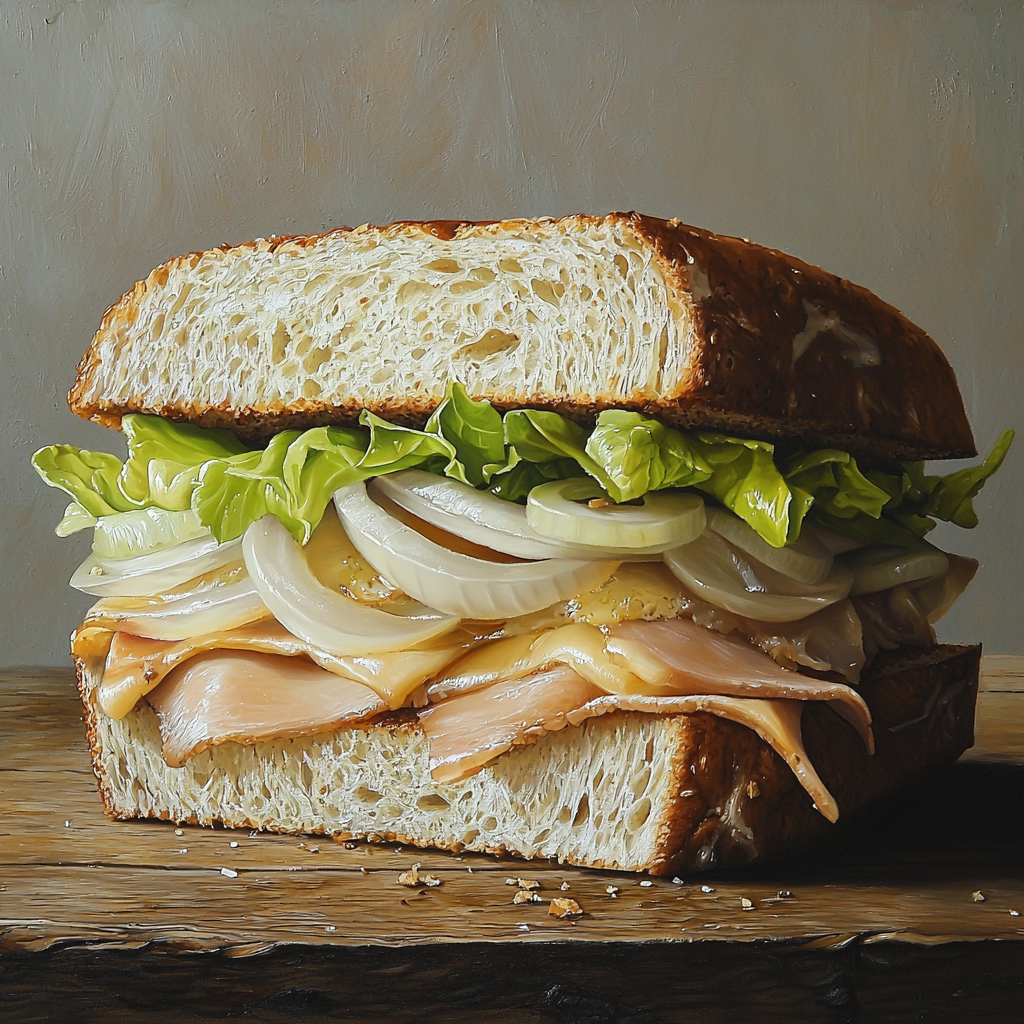
So, yeah, let's talk leftovers. People act like they’re just surplus food, but honestly? Leftovers are emotional artifacts (or at least they are for me), so heating up a plate of turkey and stuffing can unlock a surprising number of feelings you didn’t really plan for.
Seriously, all it took for me today was to open the fridge to grab some butter for my toast and see the Tupperware full of goodies to get me thinking about:
- My childhood (both the good and the bad)
- Family (and everything it does and doesn't mean to me anymore)
- Honesty, especially the emotional kind
- Old holiday scripts that never quite fit
- The dishes I cooked yesterday
- The pieces of my life that feel better than they used to
- The pieces that totally don’t
Seriously, it’s amazing what a container of leftover stuffing can dredge up.
For me, leftovers always signal the end of the “holiday moment” and the beginning of the gradual return to normal life. I love leftovers, so they’re always comforting, but they also bring on something slightly sad, like the curtain call of a play that wasn’t entirely sure what genre it belonged to.
What helps
Just lean into the comfort, even if it's a push. The day after a holiday (especially a food-focused one) is literally designed for eating things out of containers while reflecting on your existence. It's a feature, not a bug.
The "Next Thing" Anxiety Spiral
Humans have an impressively bad habit of fast-forwarding instead of simply existing in the present moment, and I'm no exception. As soon as one big thing is behind me — a holiday, a project, a milestone — my brain immediately starts scanning for the next obligation waiting in the wings, because adulting.
It doesn’t even matter if that next thing isn’t actually today’s problem. My brain pretty much always needs something to chew on, and this is the type of stuff it reaches for when there's nothing specific on the agenda.
So, if you’re anything like me, the moment Thanksgiving is over, your mind probably leaps straight to:
- The winter holidays that are now next in line
- Work deadlines (especially if you have clients who like to assign a lot of stuff right before a long weekend)
- Personal projects and self-care tasks
- Plans that involve yardwork and outdoor decor
- Gift lists (if you do gifts, which I don't anymore)
- Grocery lists
- To-do lists that have somehow bred and expanded overnight
It all creates a low-level hum of pressure that doesn’t actually belong to the present moment at all. It’s just the human brain trying to regain control after a day of emotional free-fall.
What helps
Write a very small, very gentle list of just the things you might want to do today or tomorrow. Not a complete list of your entire life or anything, just enough to reassure your mind that you’re not abandoning the future. You’re just not sprinting into it right this minute.
Transition, Don't Malfunction
Over the years, I've learned that the most important thing to understand about the day after a holiday is that I'm shifting states. That's meant learning to exist quietly between the intensity of a cultural ritual and the ordinariness of normal time.
Transitions always feel a little strange. They always ask something of us.
The emotional weirdness isn’t a sign that the holiday was lacking or that you handled anything wrong. It’s simply evidence that you’re human and your nervous system is slowly recalibrating.
If you let the day be what it naturally is — a soft landing, a gentle drift, a slightly foggy morning where nothing needs to be profound — the strangeness eases on its own.
Nothing to fix or solve. Just the natural process of passing through the narrow doorway between “yesterday’s version of me” and “today’s version of me.” And honestly? That little doorway deserves a lot more respect than people give it most of the time.