Eleven-Year-Old Me Had a Plan
What she got wrong about adulthood and what she understood better than I did

When I was 11, I believed two things with absolute, unearned confidence. That I was utterly special and destined for great things. Also, that adulthood would one day magically make sense in a way it just didn't at the time. I swear, I just assumed adults took a class at some point where they learned what to do, and that my turn to enroll would eventually come, too.
In the meantime, life still seemed filled with so much magic, in between math classes I hated, chores, and arguments with my parents.
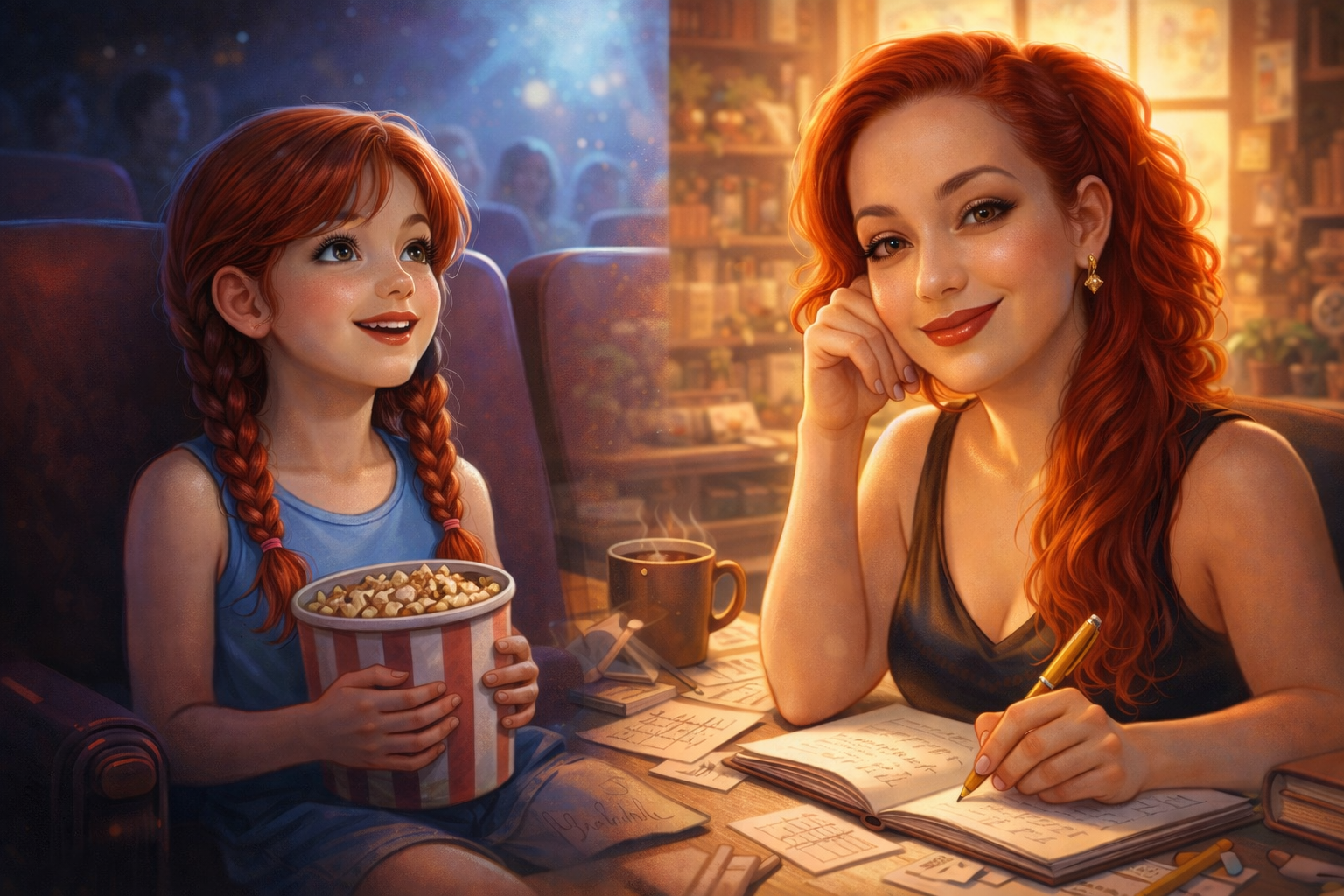
For example, I recall sitting in a dark movie theater with my dad once. He'd taken me to see Adventures in Babysitting, and it was one of the few times during my childhood when we did something really fun together, just me and him. I was completely convinced that life was going to unfold just like in the movie, too — chaotic, colorful, slightly dangerous, but ultimately cinematic.
I assumed I would grow up and eventually transition directly into some form of organized plotline. I thought maybe something would "just happen." Maybe someone would discover me and insist on bringing one or more of the talents all my teachers insisted I had to the world's attention.
And naturally, I would rise to the occasion under excellent lighting, perfect bouncy hair and all, just like Elizabeth Shue did in that movie.
At 11, I didn’t even think to question this, as I didn't quite get that movies weren't exactly accurate reflections of how real life plays out. I just knew.
But now, just a couple of weeks shy of turning 50, I would like to have a word with that girl. I wouldn't scold her or anything. I would attempt to talk some damn sense into her.
Because she got so much about life very wrong. But she got a couple of things shockingly right, as well.
Her Theory of the Future
Child Me operated under the comforting, protective umbrella of a very clean worldview. The rules, as she understood them, went something like this:
- If you are talented, the world will notice.
- If you are kind, people will respond accordingly with kindness of their own.
- If you are different, that difference will eventually be admired.
- If you feel destined for something, that feeling must mean something.
And sometimes I really miss the simplicity of that system. It fit so neatly into her backpack, right alongside all her spiral notebooks, She-Ra dolls, and Lisa Frank folders. And it left room for imagination. It left room for hope.
Adult Me would like to gently slide a thick stack of paperwork across the table labeled “How Things Actually Work.” Rent, health insurance, bureaucracy, and all those other drudges that come with even the smoothest adult life. And especially the fact that talent alone rarely knocks on doors or gets them to open.
Child Me assumed adulthood would come with crystal clarity. Instead, it came with a whole lot of nuance and many layers, as well as the slow realization that systems reward certain traits while sidelining others that are arguably a lot more commendable.
Effort and outcome rarely hold hands, and the current version of me absolutely knows it. If Child Me could see my Google Calendar, she might blink twice.
The Confidence of the Unbruised
At 11, I possessed a level of self-assurance that feels almost mythic now. I hadn't learned to obsess over optic yet. I certainly didn’t curate things about myself with any regularity or second-guess whether I should share a thought (even though maybe I should have).
Instead, I wrote things down because they mattered to me, and I drew pictures because I wanted to. I assumed my interior life held value — not just for me, but ultimately for the rest of the world, as well.
That is no small thing. Not at any age, and definitely not in this world.
But somewhere between then and now, life sanded a lot of that confidence down and shaped what was left of it into something that looks suspiciously like defiance. Disappointments accumulated, people misread me, and I learned to expect that.
I also learned that admiration (when it does come) often also comes bundled with projection via people who are just as confused and disappointed. I discovered that being seen and being understood are very different experiences, and I am still in the process of figuring out what to do with that.
Child Me never worried about parasocial weirdos, as she hadn’t yet encountered the fascinating phenomenon of people building entire imaginary relationships around a photograph and a paragraph or two.
She just existed.
She liked her face. She loved all her ideas. And she unwaveringly believed she would grow into someone important.
But important how? To whom? In what room?
I suspect she would shrug and say, “Important to me.” And she'd be right to do so.
What She Miscalculated
I mean. Child Me wasn't exactly the Dalai Lama or anything, as she did overlook a few things. For instance, she did not account for:
- The sheer stamina required to maintain a creative life alongside paying bills
- The emotional labor of navigating other people’s expectations
- The way ambition morphs when you realize a spotlight isn’t guaranteed
- The slow, persistent hum of existential restlessness that follows you well into middle age
She assumed the world functioned like a meritocracy with better lighting, so she expected narrative arcs. She didn't anticipate how often progress would look like inches instead of leaps.
She also assumed that by 50, she would feel settled and super certain about life.
Instead, I often feel like I’m still mid-plot, even now that I'm almost certainly at least two-thirds of the way through the book by now. The next chapter heading hasn’t fully revealed itself, there’s scaffolding everywhere, and the paint on the walls is still wet.
So, if Child Me walked into my office today, she might ask, “Is this it?” And I would answer, “It’s part of it.”
The Parts She Nailed
For all her naïveté, Child Me possessed a few instincts I’m only now fully appreciating as my 50th birthday continues to approach:
- She trusted her own interiority and didn’t outsource her sense of self. To anyone, even her family and close friends.
- She believed her life could hold meaning beyond basic survival, and that belief turned out to matter more than I realized at the time. It’s literally meant the difference between drifting aimlessly and intentionally steering.
- She understood something critical about imagination that Adult Me occasionally forgets. You don’t need permission to create a world that appeals to you. You just grab an air hammer and start building.
The projects I’m working on now — the writing, the art, the mythos, the long threads that connect one version of me to the next — feel much closer to her original blueprint than I would have guessed a few years ago.
She thought she would be “discovered," and that for sure hasn't happened. No one ever stopped me on the street or knocked on my door before exclaiming, "There you are!" There's never been an agent sliding a contract across a polished desk while orchestral music swelled, either, and maybe there never will be.
But she knew she would create, and that part certainly came true. Maybe not the way she imagined it, but so the fuck what?
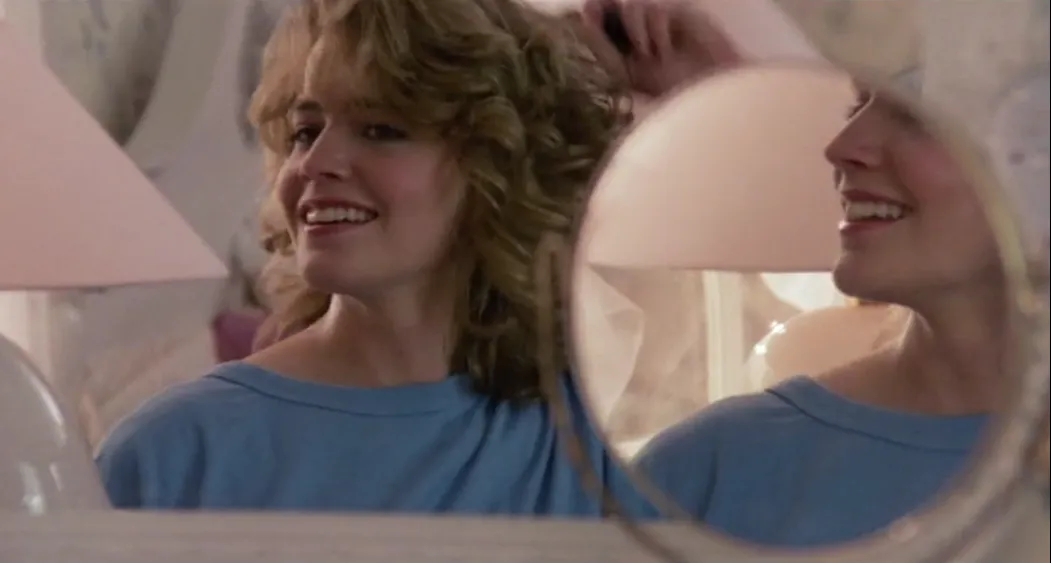
The Movie Theater Myth
When I think back to that afternoon watching Adventures in Babysitting with my dad, I still strongly remember the feeling. It especially comes flooding back to me when I rewatch the film today. I clearly recall the sense that life could be strange but still organize itself toward a happy ending. That you could stumble into chaos and come out on the other side sharper, funnier, more yourself than ever.
Life since 1987 hasn’t followed a tidy three-act structure or anything close to it. It zigzags without ceasing. Sometimes it stalls and stays stalled for long periods at a time. Occasionally, it feels like someone lost the script entirely, if there ever was one.
Yet I can't seem to quite let go of the belief that the progression of my life isn’t completely random. That even the detours were ultimately part of the story and might make more sense "someday."
I long ago stopped expecting flattering lighting and a soundtrack that keeps me in the know as to what's going on at any given time. I still feel the current, though, even if I have to go digging for it.
Growing Into, Not Away From
I have to admit that sometimes it’s tempting to frame the girl I was at 11 as a missing piece I should be trying to reclaim. A lost artifact, a version of me who existed before disappointment entered the chat and decided to monopolize the conversation.
But that just doesn't cover how I really feel about it at this age. That girl didn't disappear. She just evolved.
Now I guess we meet in the middle.
So, if I could sit beside her in that theater again, I wouldn’t necessarily correct her or shatter that pleasant little bubble every child honestly deserves to live in for a while. But I would tell her she was right about the most important thing:
You are special. Just not the way you think.
You won’t glide into destiny. However, you'll move toward it regardless, piece by piece, in between errands and invoices and ordinary Thursdays. You’ll question yourself more than you expect, but you’ll also surprise yourself.
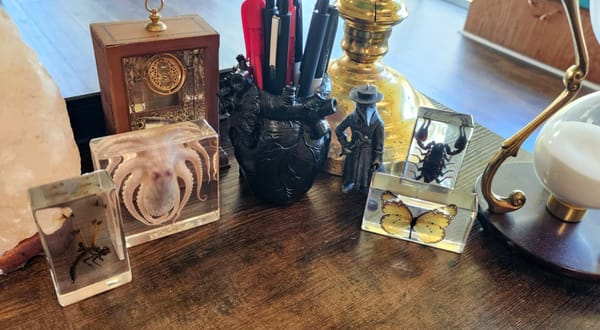
And one day, at almost-50, you’ll sit at a really cool desk with an hourglass on it and write about this. You’ll laugh at your own intensity (regularly) and still feel that hum of “there must be more.” You’ll still believe your interior life matters.
But you won’t look like the heroine you imagined. You’ll look like yourself. And somehow that turns out to be a much better plot twist.